



From the Strait of Hormuz to Pipeline Corrosion: Why Geopolitical Crises Make Cathodic Protection Strategic
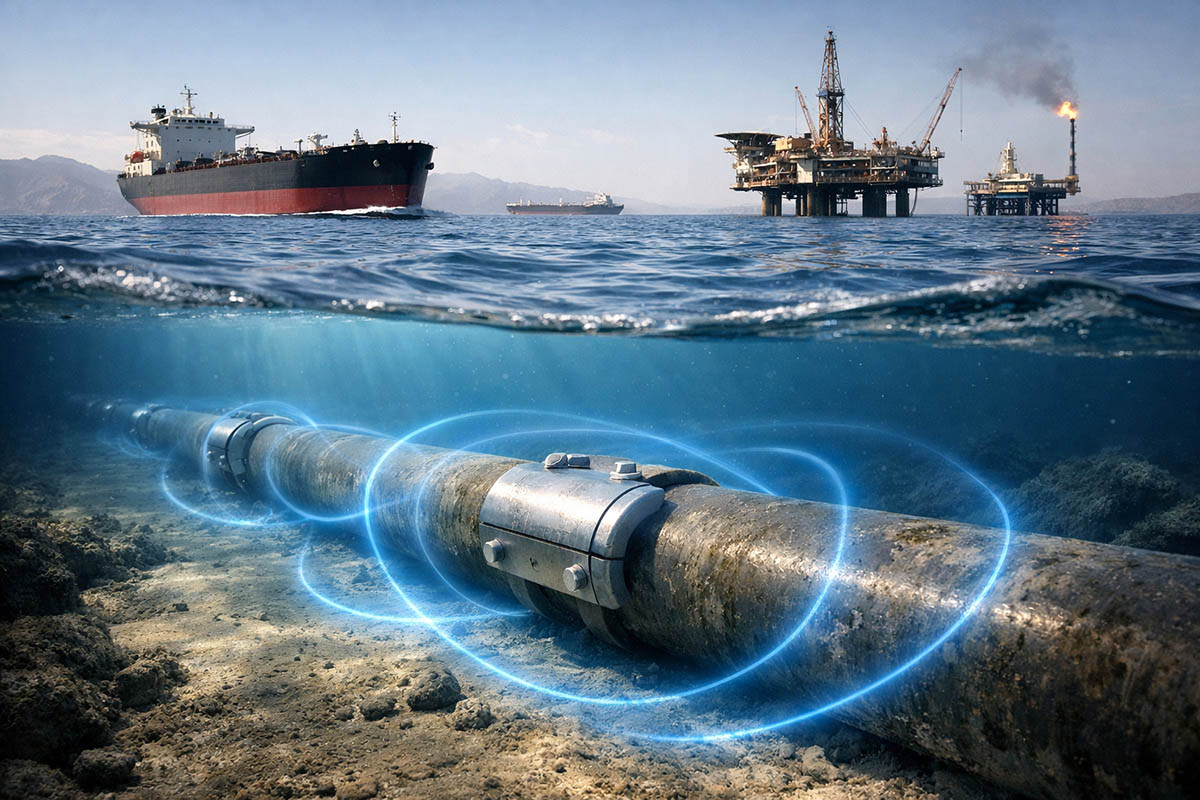
In recent months, the possible closure of the Strait of Hormuz has once again taken center stage in international discussions. This maritime passage represents one of the most critical nodes in the global energy system: a significant share of the world’s oil and liquefied natural gas flows through these waters every day.
At first glance, geopolitical events of this kind may seem far removed from the field of corrosion engineering. In reality, there is a deep — though often invisible — connection between international energy tensions and the role of cathodic protection in industrial infrastructure.
Understanding this link means recognizing how global energy security also depends on seemingly silent electrochemical phenomena.
The Strait of Hormuz: a critical node for global energy
The Strait of Hormuz connects the Persian Gulf to the Indian Ocean and is one of the world’s main energy chokepoints. When maritime traffic slows down or is disrupted, the consequences spread rapidly:
- rising energy prices;
- reorganization of supply routes;
- increased use of alternative infrastructure;
- greater operational stress on existing pipelines and terminals.
In other words, when one energy route is blocked, the entire global infrastructure system must quickly adapt.
And this is precisely where cathodic protection comes into play.
Energy and infrastructure: the real point of vulnerability
Oil and gas are not simply commodities—they are continuous flows that depend on a complex network of infrastructure, including:
- onshore and subsea pipelines;
- offshore platforms;
- storage terminals;
- buried tanks;
- port and regasification facilities.
During a geopolitical crisis, these assets are often operated beyond standard conditions. Secondary pipelines are reactivated, older facilities return to service, and scheduled maintenance cycles may be delayed.
The result is a significant increase in the primary risk affecting any metallic structure: corrosion.
Corrosion: the invisible enemy of energy crises
Corrosion is a natural electrochemical process that tends to return metals to their original state. Under normal conditions, it is controlled through:
- protective coatings;
- continuous monitoring;
- cathodic protection systems.
However, during energy emergencies, several factors accelerate degradation:
- variations in flow rates and pressure;
- increased stray currents;
- changes in marine or soil conditions;
- reduced maintenance activities;
- extended lay-up periods.
These conditions disrupt the electrochemical balance of metallic structures, increasing the risk of localized corrosion and sudden failures.
Why geopolitical crises increase the importance of cathodic protection
Cathodic protection becomes strategic in at least four typical scenarios generated by crises such as those involving the Strait of Hormuz.
1. Increased use of alternative pipelines
When maritime routes are restricted, energy transport shifts toward alternative onshore or subsea pipelines, often older and not designed for higher loads.
Infrastructure originally built for lower capacity must handle increased throughput, making it essential to verify and upgrade existing cathodic protection systems.
2. Operational stress on offshore facilities
Rising energy demand leads to continuous operation of offshore installations.
This results in:
- higher consumption of sacrificial anodes;
- variations in protection potentials;
- accelerated coating degradation.
Without proper cathodic control, corrosion risk increases exponentially./p>
3. Shutdowns and restart of facilities
Geopolitical or military events can lead to temporary shutdowns of energy infrastructure.
During idle periods:
- electrochemical conditions change;
- potential differences develop;
- localized corrosion phenomena intensify.
Before restarting operations, thorough verification of cathodic protection systems is essential to ensure safety and structural integrity.
4. New energy investments and infrastructure
Energy crises often accelerate the development of:
- new pipelines;
- LNG terminals;
- alternative energy hubs;
- offshore installations.
Every new asset requires advanced cathodic protection design from the earliest engineering stages, as prevention costs are significantly lower than corrective interventions.
Cathodic protection and energy security: a strategic connection
Energy security is often associated with geopolitics, fuel reserves, or economic strategies. However, there is a deeper and less visible layer: the physical reliability of infrastructure.
A corroded pipeline, a degraded storage tank, or an inadequately protected offshore structure can disrupt energy supply just as much as an international crisis.
Cathodic protection therefore plays a key role in:
- preventing leaks and environmental incidents;
- ensuring operational continuity;
- extending asset lifespan;/li>
- reducing maintenance costs;
- increasing overall system resilience.
From geopolitics to electrochemistry: a hidden connection
Events involving the Strait of Hormuz demonstrate how global phenomena and seemingly distant technical disciplines are closely interconnected.
Energy crises test not only markets and governments, but also the reliability of the industrial infrastructure that supports the modern economy.
In this context, cathodic protection is not merely a maintenance technology, but a strategic tool for prevention and safety.
Latest News
- When a vision becomes a direction for the entire industry
- Cathodic Protection and the Energy Transition
- From the Strait of Hormuz to pipeline corrosion
- New SAIT Shop now online
- Advanced solutions for cathodic protection
- Article on Cathodic Protection in Water Distribution Networks – Servizi a Rete, November-December 2025
- New article on Iron Probe Desert
- Complete Guide to Cathodic Protection of Pipelines: Prevent Corrosion and Extend Service Life
- Corrosion Protection: Interview with Marco Facciadio
- Cathodic Protection: Active and Passive
- The Importance of Cathodic Protection for a Sustainable World
- What are sacrificial anodes used for?
- How is an underground steel pipeline protected from corrosion?
- Pipeline & Gas Expo
- Conference & Expo 2024 in Genoa
- Cathodic protection for aqueducts
- APCE Seminar
- National Corrosion and Protection Day
- APCE Study Day
- IRON PROBE
- T.E.S Power Supply
- Anticorrosion Products Sale
Gallery

Topics
- CATHODIC PROTECTION
- IRON PROBE
- IRON PROBE DESERT
- POTENTIAL PROBE
- CATHODIC PROTECTION ELECTRODE
- Reference electrode
- CATHODIC PROTECTION SYSTEMS
- CATHODIC PROTECTION SERVICES
- METAL INFRASTRUCTURE INTEGRITY
- CORROSION
- Galvanic Corrosion
- CORROSION MONITORING
- Sacrificial Anodes
- CATHODIC PROTECTION POWER SUPPLIES
- Stray Currents
- PROTECTION DESIGN CATHODIC
- GALVANIC PROTECTION
- GALVANIC CORROSION
- CATHODIC PROTECTION DESIGN